
Scott Logie is the Project Director at Beca, a multidisciplinary advisory and design consultancy headquartered in Auckland. His pathway into the built environment began through a summer job with Mainzeal Construction in the early 1990s while studying at Auckland University.
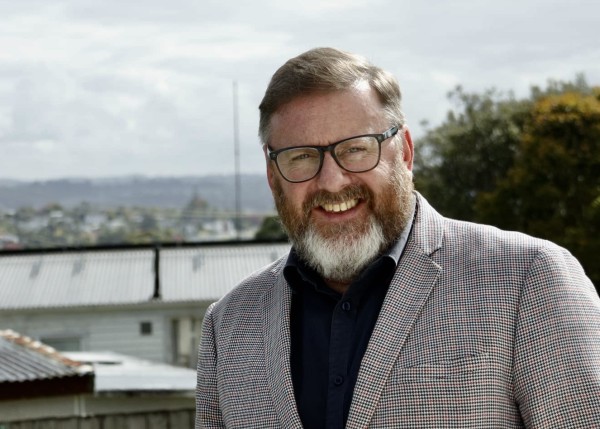
“Working with Mainzeal proved formative, ultimately leading to an offer to join the business as a construction management trainee. The role sat within a newly piloted programme, developed to replace Mainzeal’s longstanding apprenticeship model. Looking back, it was an invaluable early exposure to the breadth of skills demanded by a main contractor, as well as the realities of working on technically complex and high-pressure projects.” Scott was fortunate to be part of highly experienced project teams led by seasoned project managers, programmers, planners, and cost professionals in both the Auckland and Wellington branches.
Today, Scott leads Beca’s technical construction monitoring of the Terminal Integration Enabling Programme at Auckland International Airport. Scott maintains strong client relationships and ensures their requirements are met by successfully delivering technical services. He oversees more than 100 engineers and designers across 11 design disciplines on multiple live terminal and infrastructure upgrades. He is co-located with the client and contractor to enable timely, high-quality outcomes, with his day largely spent in planning discussions and working closely with project partners to align priorities and ensure actions are in place to achieve the next milestone.
Scott has been a member of the Building Institute Aotearoa since 1996 and appreciates the strong sense of belonging the Institute provides within the commercial construction sector. “The Institute provides a forum for industry professionals to come together and share experiences. It offers an opportunity to stay informed about current projects while gaining insight into innovative building practices. At its core is a passionate community of professionals who genuinely care about the built environment and recognise achievement and excellence.”
Having graduated from Victoria University, Scott also values the longstanding relationship between the university and the Building Institute, which has further strengthened his connection to both. He says the Institute’s diverse membership brings together people from across the industry, creating an environment where experiences, strategies, and learnings are openly shared. “I enjoy seeing the hard work of members recognised and celebrating collective successes. Through these established relationships, I was able to reintegrate seamlessly into Building Institute activities after spending several years working overseas in Asia. More recently, I have had the privilege of serving on the Constitution Committee and am now a member of the Risk and Audit Committee and the Northern Regional Committee,” says Scott.
At the beginning of Scott’s career, working onsite taught him that even the best designs can fail if they’re not understood, buildable, or supported by the right behaviours. As his responsibilities expanded into design leadership, consultancy, and major programmes, that lesson deepened. “Complexity isn’t solved by more process alone; it’s managed through clarity, trust, and timely decision making. I have seen that projects succeed when teams are aligned around a clear objective, when risks are surfaced early rather than deferred, and when difficult conversations are had before issues harden into disputes.” His experience abroad reinforced this further, highlighting how cultural awareness, stakeholder relationships, and leadership under pressure can be just as critical as technical expertise. Scott says when those elements are balanced, even the most complex projects become manageable and far more resilient.
When it comes to projects, Scott can relate to the proverb, “Smooth seas do not make skilful sailors.” He takes great pride in seeing projects through to completion, knowing firsthand the effort, perseverance, and problem-solving involved when very few others truly see it. A milestone he was especially proud of was the construction of the new Pier B terminal at Auckland Airport in 2008, built to accommodate the first-ever arrival of the Airbus A380 to New Zealand. “The team worked tirelessly to deliver two new passenger boarding gates along with all the required infrastructure upgrades. When it finally came time to celebrate the project’s completion, marked by a ballroom dinner held inside the newly finished terminal itself, I was welcoming an even more significant achievement, the birth of my beautiful daughter,” says Scott.
Over the years, Scott has seen many people develop a systemwide perspective by working on all sides of the industry throughout their careers, saying the New Zealand built environment sector is surprisingly fluid, with many people moving easily between client, contractor, consultant, and regulatory roles. He adds, “What often surprises people is how common it is in New Zealand for practitioners to shift between different sides of the industry. It’s a breadth of experience that the Building Institute captures and represents well.”
For anyone considering a career in the built environment, Scott’s advice is to stay curious, dependable and take the time to understand how the wider system works, not just a specific role. “Most building projects rely on the same core technical skillsets to deliver a coordinated design and a compliant build. While projects may vary greatly in scale and complexity, the underlying process is largely consistent,” says Scott. He believes that strong outcomes come from combining sound technical thinking with a solid understanding of how projects are actually delivered.
Out of work, when Scott isn’t trying to improve his golf game, he heads out with his family to enjoy a walk on Auckland’s western beaches and bush trails. “I am making the most of enjoying our children before they fly the nest. We are so blessed with our native bush and bird life out west.”