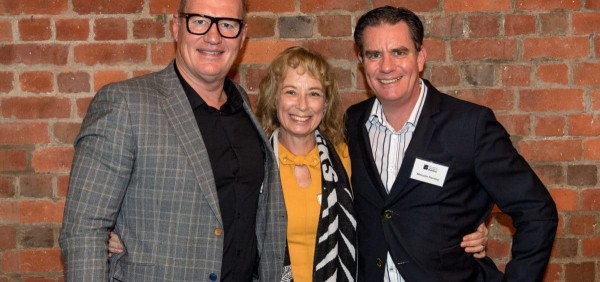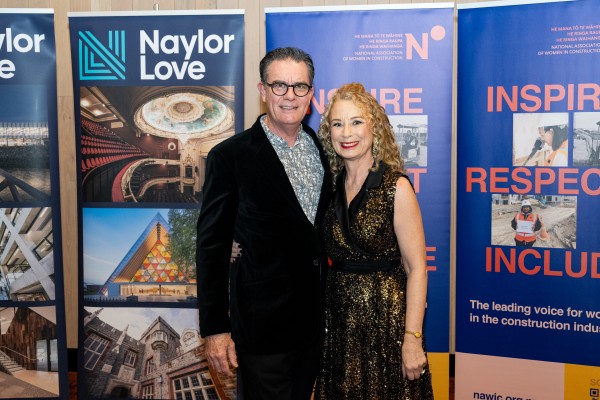
Gina Jones was drawn to architecture because it combined creativity, logic, technology, and real-world impact. At school, her strongest subjects were maths and art. She loved the way these subjects intersected, blending creativity, logic, and practical problem-solving. “When I was very young, I spent hours designing houses with one of the early construction block systems that pre-dated Lego, inspired by the Sunset magazines my parents had. One aunt observed that I should become an architect - a comment she was amused to be reminded of years later.”
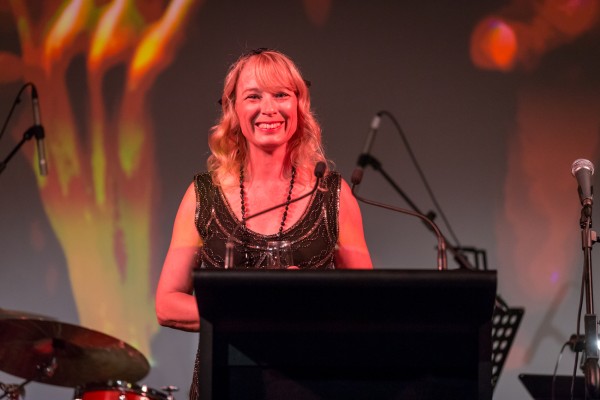
Her father was Head of the Systems Laboratory at the Ministry of Works, where his team pioneered some of New Zealand’s earliest computer-aided design and base-isolation technology. “In the early 1970s they produced 3D computer images of our new family house at the Vogel Building, more than a decade before AutoCAD and personal computers became mainstream. That early exposure to design, technology, and innovation had a huge influence on me.”
During her sixth-form year, Gina was a passenger in a serious car accident. While she was recovering, her father, who was on the school Board of Governors at the time, brought the school's first computer home while he prepared it for installation at the school. For a school maths project, Gina learnt to programme the computer to generate minimalist artworks. Her father was instrumental in providing opportunities for insight into the architectural industry. “He arranged for me to spend a day with a female architect at the Ministry of Works and to meet Professor Helen Tippett during Helen’s first week at Victoria University. Those experiences expanded my sense of what was possible.”
Gina’s pathway into architecture was not entirely straightforward. After her parents separated, she briefly studied Architecture Intermediate at Victoria University Wellington (VUW) but quickly realised she needed time to work out whether architecture was genuinely her own choice or simply the world she had grown up in through her father’s career. “I left VUW after only a few days and entered the workforce, returning to the School of Architecture two years later with much greater certainty and commitment. Over time, I also discovered I was naturally drawn to governance and advocacy, not in a loud or overt way, but through a strong sense of fairness and wanting to support people and causes that mattered. Much of my work through the New Zealand Institute of Building (NZIOB), the National Association of Women in Construction (NAWIC), heritage advocacy, and the New Zealand Registered Architects Board (NZRAB) grew from that instinct.”
It has been 40 years since Gina became involved in the built environment, and she says the industry has changed enormously technologically, culturally and professionally. “When I entered the profession in the mid-1980s, construction and architecture were still extremely male-dominated. Long hours were worn as a badge of honour, and you were expected to adapt to the culture rather than the culture adapting to you. That said, the practice where I first worked was progressive for its time and enabled me to complete my architecture degree part-time with paid study leave each week, while continuing to work.”
Her first major project, the Queen Margaret College redevelopment, gave Gina a rather misleading introduction to the industry. The project involved an unusually high number of women in key roles, and the Principal, Marion McCree, strongly encouraged Gina’s involvement from the outset. The Board Chair, quantity surveyor, and services engineer were all women, and at times, so was the structural engineer. Often the only male at site meetings was the contractor. It wasn’t until later projects that Gina realised just how unusual that environment actually was.
“One of the reasons Stacey Mendonça and I later established NAWIC was because we could see that women were still isolated across much of the construction sector. In fact, Stacey and I were originally introduced by a Fletcher Construction project manager because she was new to Wellington and wouldn’t know any women in the industry. At the time, there were very few visible industry females or networks, mentors, or leadership pathways. Looking at the NAWIC Awards today and the extraordinary breadth of women now leading projects and businesses across the industry is probably one of the clearest reflections of how much the culture has changed.”
Gina adds that technology has also transformed the industry just as dramatically. “I began in the era of hand drawing and manual systems and have worked through the transition to BIM, digital collaboration, sophisticated procurement systems, and increasingly complex regulatory environments. Interestingly, I undertook my university research on BIM-related systems long before they were widely adopted.” Throughout her career, Gina has worked at the leading edge of digital modelling technologies, including the early adoption of sophisticated digital twin approaches.
She reflects on the changes she has seen over time in the built environment: “Within the industry today there is a much stronger understanding of collaboration, sustainability, heritage, wellbeing, and long-term building and environmental performance. The industry is broader, more interdisciplinary, and far more connected than it once was, although there is still more progress to be made.”
In 1986, Gina joined the NZIOB as a student member while studying architecture at Victoria University. This was prompted by Professor Helen Tippett, the only female lecturer she had at the School of Architecture, who had promoted NZIOB membership during one of the Professional Practice lectures, suggesting that the Institute would be a good organisation for architectural students to join because of its interdisciplinary focus.
What instantly appealed to Gina about the NZIOB was the opportunity to engage with people from right across the construction sector. “At that time, Te Kāhui Whaihanga New Zealand Institute of Architects still felt very much like an old boys club, and it was not always particularly welcoming to younger women entering the profession. In contrast, the NZIOB always felt inclusive, collegial, with a genuine interest in encouraging younger members and broader participation,” says Gina. Over the years she became involved in a range of roles within both organisations. But it was the NZIOB’s interdisciplinary culture and strong sense of professional connection that particularly resonated with her.
“One of the things I particularly valued about the NZIOB was its original purpose around fostering professional connection and the friendly exchange of knowledge and ideas across the industry. That interdisciplinary collegiality was something I always found enormously valuable.”
Gina served on the NZIOB Central Chapter Board from 1991-2002 and was Central Chapter President from 1994-1996 before moving into national governance roles. She then served on the National Practice Committee from 1996-1998 before becoming National President via election in 1998-1999 and again in 2000-2001, becoming the first and only female to hold the role. “Being the National President was both a privilege and a significant responsibility.
Interestingly, I never personally felt that gender itself was the greatest challenge. The NZIOB was remarkably inclusive for its time, and I was fortunate to be encouraged and supported by several senior figures in the industry,” says Gina.
She adds that the bigger challenges were probably financial and resource-related. “At the time I was serving nationally, I was also building my own architectural practice from a converted garage at home. In those days, much of the involvement associated with awards and industry events was self-funded; no complimentary tickets back then! Thankfully, many of my Board colleagues were senior figures within large construction companies who had organisational and administrative support which assisted small practice owners like me. I remain particularly grateful to people like Bob Hall from Fletcher Construction, who often invited me to attend events as Fletcher’s guest, making participation much more achievable.”
The NZIOB was largely volunteer-driven. Gina says they were fortunate to have Shirley Fisher as Executive Secretary, but most of the Institute’s organisational work was undertaken directly by the Board and Chapter Committees. “Having the Board and Chapter Committee involved created a very strong sense of ownership, camaraderie, and shared purpose. We worked hard, but we also had a great deal of fun along the way.”
Gina says that one of the things that surprised her the most was just how valuable the relationships across the industry became over time. “The NZIOB created opportunities to meet people at the Institute’s events who you could later end up working alongside on project teams or governance groups. Those relationships and professional connections became enormously important throughout my career.”
Looking back, Gina thinks the role as President reinforced how important professional organisations are, not simply for networking, but for creating long-term relationships, trust, leadership pathways, industry advocacy, and a genuine sense of professional community across the construction sector. “The NZIOB, now known as Building Institute Aotearoa, is unique in representing the full breadth of the construction industry. We worked hard to ensure it retained a strong and respected voice within the sector.”
During her time as President, Gina had a strong focus on strategic planning, organisational development, and the Institute’s future evolution. She also appointed the NZIOB’s first paid Chief Executive and developed the Registered Construction Manager qualification, both important steps in the organisation’s development. Gina was very passionate about encouraging younger people to work in the building industry and join professional organisations. The NZIOB’s Central Chapter in particular had a very long-term view. They believed if students and younger members felt welcome, connected, and supported early on, they would often remain involved throughout their careers and eventually become future leaders in the industry.
“A major focus for me during my term as President was to strengthen relationships and collegiality across the sector. The NZIOB was, and Building Institute Aotearoa still is, unique in representing the full breadth of the construction industry.”
After her term as President, Gina continued to serve the NZIOB in a range of governance and leadership roles for a further 13 years. She served on the NZIOB Education Trust - now the NZIOB Charitable Education Trust, the Unitec Construction Management Degree Re-Accreditation Panel, and the National Education Committee. Gina was the Convener of Judges for the National Building Excellence Awards and Chair of the NZIOB Charitable Education Trust.
“An earlier iteration of today’s NZIOB Charitable Education Trust had become inactive by the time I became Chair. We reinvigorated it by establishing successful fundraising events, awarding significant scholarships, and repositioning the Trust to play a more strategic role in supporting innovation and research within the construction industry. That period was just as enjoyable as my term as President. I stepped down in 2018 following my appointment as Chair of NZRAB, having already served as an assessor since 2006 and on the NZRAB Board since 2017.”
Alongside her early NZIOB involvement, Gina co-founded the National Association of Women in Construction (NAWIC) New Zealand in the mid-1990s and later became the inaugural National President when the organisation transitioned to a national body in 2012. Drawing on her experience with the NZIOB, she also introduced the NAWIC Excellence Awards, helping recognise and celebrate women's achievements across the construction industry.
After more than 35 years in continuous practice and industry leadership roles, Gina’s career changed unexpectedly following a serious concussion injury from a mountain bike accident in late 2020. “I was ultimately medically retired from my role as National Lead Architect at Catalyst Consulting in 2022 and, unfortunately, I am still not able to return to professional work. I had hoped to increase my contribution gradually again; however, after further concussion injuries, including another earlier this year, my primary focus for now is very much on recovery. More recently, I have also stepped down from my roles with NZRAB and the Greytown Heritage Trust to focus fully on that process.”
Recovering from her injury has required a major adjustment, both personally and professionally. For now, even though Gina’s life has become much quieter and more local, she remains interested in the industry, governance, heritage, and community issues. Outside her professional life, Gina enjoys gardening, heritage and community projects in Greytown, and classic car activities with her husband, Malcolm Fleming. Together with Malcolm and another couple, they organise the annual Wairarapa Distinguished Gentleman’s Drive, raising funds through Movember to support prostate cancer and men’s mental health. Last year’s inaugural Wairarapa event was the largest in New Zealand both in participant numbers and funds raised.



“I’m also hoping that very gradually and with plenty of patience, I can get back into my art practice, driving my classic cars, mountain-biking, and hiking again after the ongoing concussion setbacks. At the moment it is definitely baby steps, but I am increasingly valuing creativity, contribution, connection, and simply finding ways to keep moving forward.”
Thinking ahead another 40 years, Gina would like to see an Institute that continues to evolve while maintaining strong professional standards, integrity, collaboration, and a commitment to lifelong learning. “I hope the industry continues to become more inclusive and diverse, not simply because it is fairer, but because broader perspectives lead to better thinking, better leadership, and ultimately better outcomes for the built environment. I would also like to see a stronger emphasis on sustainability, heritage, wellbeing, and long-term thinking. Building not just for performance and efficiency, but for people and place.”
Gina adds that, importantly, she would like to see the Institute strengthen its advocacy voice for the construction industry. “One of its greatest strengths has always been its ability to bring together people from across the full breadth of the sector and encourage collaboration rather than fragmentation. That independent, cross-disciplinary perspective is increasingly important and, in my view, should continue to grow in influence and confidence. If the past 40 years have shown anything, it is that steady persistence can gradually shift an industry’s culture. I hope the next 40 years continue that work, creating an industry that is collaborative, inclusive, future-focused, and deeply connected to both people and community.”
For people thinking about a career in the built environment, Gina says, “Back yourself and stay curious. Learn the technical fundamentals thoroughly. Competence builds confidence and credibility. The industry is ultimately about people as much as it is about projects; communication, collaboration, leadership, and resilience matter enormously.”
She says to find people who share your values and don’t be afraid to step outside your comfort zone. Take on opportunities even if you don’t believe you are suitably experienced or credentialed to do so. “Some of the most worthwhile things I’ve done, including establishing NAWIC and putting myself forward for the NZIOB Presidency, occurred long before I felt fully ready. But most importantly, remember that the built environment shapes how people live, work, and connect. It is a profession where you can genuinely make a lasting difference.”