
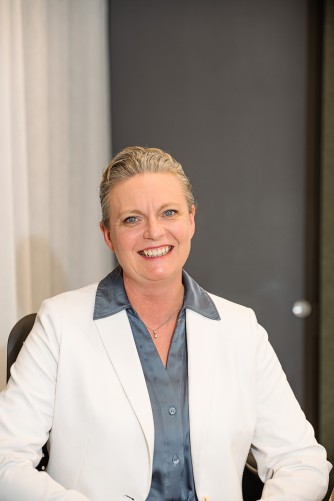
Christina de Boer is the Head of Design Delivery at Summerset, working within the Development Senior Leadership Team. She leads the in-house architectural and design management team and manages the design phase of the villages from post-concept through to completion on site. Christina and her team turn vision into reality, ensuring design intent is translated into high-quality, buildable outcomes that meet stakeholder needs and successful delivery on site. A typical day in the office for Christina is a balance of aligning the team with the company’s strategic goals, hands‑on problem solving and guiding people leaders. She works with in-house construction and development partners to agree on priorities and manage risk early, ensuring decisions are made with long‑term value in mind.
After graduating with a BEng (Hons), Christina began her career on site in 1998, working for a main contractor in England as a setting‑out engineer. She progressed through site management roles and eventually moved to London, where she transitioned into design management. “At the time, design management was still an emerging discipline in the construction industry, and there were very few women in those roles. With a background spanning both civil engineering and on-site delivery, it felt like a natural way to bring design and construction together,” says Christina.
She remained in design management until she had what she calls her motherhood pause, a period that profoundly shaped her career in unexpected ways. “For much of the 2000s, I was often the only woman in the team, and I learned to survive by hardening up, being forceful, and trying to be one of the boys. Empathy wasn’t something I led with. Becoming a mother and later navigating post‑natal depression challenged that approach entirely. It forced me to confront vulnerability, let go of control, and rethink how I wanted to lead. That experience reconnected me with my values and reshaped how I engage with people and complex situations - less bulldozing, more honesty, empathy, and trust.”
Christina joined Summerset 10 years ago, just as she was ready to return to work full‑time. She started with a small architectural team that grew in capability and confidence to deliver some of Summerset’s most complex design projects. Christina adds, “Growing that team has been a true honour. The skills and values I bring to my role today have been shaped by a diverse range of influences. From building legends on site to inspiring women across the industry, my own family, and my team, whose thoughtful challenge and diverse perspectives push me to be better every day.”
Christina says her involvement with the Building Institute has been a significant part of her professional growth. She has progressed from being a regional committee member to chairing the committee and, more recently, joining the board. She says that each step has given her new perspectives and opportunities to learn.
“I initially joined the Building Institute to connect with like‑minded industry professionals. What I found was a community of people I could both learn from and contribute to. The Institute has expanded my network, but more importantly, it has supported my personal growth by challenging my thinking, building my confidence, and exposing me to different viewpoints across the industry.”
Stepping into the boardroom was a new experience for Christina, but the support and encouragement she got from fellow board members has been incredibly valuable. She says that being trusted, supported, and constructively challenged in the boardroom environment has accelerated her learning and reinforced the importance of inclusive leadership. She adds, “I feel genuinely privileged to be part of this group of professionals, and I’m most excited about the opportunity to contribute, influence, and help provide a strong, considered voice for the building industry.”
Through her work in the built environment, one of the most valuable lessons Christina has learned is the importance of being herself and having the courage to do things that stretch her - saying that some of her biggest growth moments have come from stepping into situations that felt uncomfortable, taking on new responsibilities, speaking up when it would have been easier not to, and trusting her own judgment.
She has also learned how important it is to hold firmly to her values and to let go of things she can’t control. “The idea of ‘let them’ has been particularly grounding for me. Focusing my energy on what truly matters, rather than being distracted by external noise or expectations. That mindset has helped me lead more authentically and create space for others to contribute in meaningful ways. Leadership has played a huge role in shaping this lesson. I’ve experienced both strong and poor leadership throughout my career, and seeing the difference has been powerful.”
Christina adds that having leaders who genuinely supported and trusted her, challenged her constructively, and backed her when it mattered has reinforced how important good leadership is. “It’s doubled down on my desire to be that kind of leader for others, someone who creates safety, encourages growth, and leads with empathy and integrity. Staying true to who I am, being willing to stretch myself, and leading in a way that aligns with my values has shaped not only how I work but how I support and influence others in the built environment.”
A project that Christina is particularly proud of is the St Johns village in Auckland. During her first year at Summerset, she visited the newly procured site. St Johns village was going to be Summerset’s first fully multi‑storey, metropolitan village, and from the outset, it represented a significant step change for the business. By the time the team were ready to proceed into design delivery a few years later, Christina had deliberately built the capability within the team to bring the developed detailed design phases in‑house.
“We had successfully delivered two multi‑storey apartment buildings at other villages, which gave the business confidence that we could achieve a strong outcome at St Johns—our flagship project. Given the scale of the development, approximately $350m in total construction value, we took a hybrid approach, partnering with our trusted architectural practice, Design Group Stapleton Elliott, for some buildings, while delivering others entirely in‑house,” says Christina.
The first buildings were handed over in late 2024, allowing residents to move in. The feedback from residents has been overwhelmingly positive, and the team is rightly proud of what has been achieved. It was a long and complex journey, marked by a changing brief, extensive value engineering, a global pandemic, and significant procurement and construction challenges, but Christina and her team delivered a high‑quality village in an extremely challenging economic environment. Most importantly, the St Johns project was a defining growth moment for the team. It strengthened confidence in their capabilities and directly enabled the team to deliver their second metropolitan project, Half Moon Bay, fully in‑house.
Some people don’t realise how people‑centred and long‑term the work in the built environment can be. While the outcomes are physical buildings, success depends on years of collaboration across many disciplines. Navigating changing briefs, market conditions, regulations, and unexpected challenges along the way. It requires resilience and adaptability, not just technical skill.
“There is a significant sense of responsibility that isn’t always visible from the outside. In sectors like retirement living, the decisions we make shape people’s homes and daily experiences. That weight drives a very high bar for quality, safety, and long‑term thinking. What many people in the built environment don’t expect is how personal the work becomes. You may start with drawings and programmes, but you end up deeply connected to how people live, age, and feel in the spaces you create. Seeing residents move in and genuinely love their homes is incredibly rewarding, and it’s that human impact, more than the buildings themselves, that makes the work so meaningful,” says Christina.
Over her time in the building and construction industry, Christina has seen a noticeable shift in how diversity and inclusion are viewed. “It’s far more accepted now to simply be yourself. If you asked a child to draw a typical builder today versus 20 years ago, I’m sure the pictures would look very different. We now see a much broader mix of genders, ethnicities, and people being open about who they are, both on-site and in management roles.”
Today, there are far more women entering the built environment, with an expectation that they’ll stay and build long‑term careers in the industry. While the gender pay gap will take time to fully correct as more women pass through the ranks, the difference now is that there are far more women coming through. Christina remembers being a 21‑year‑old graduate on site and discovering that the male graduates had all sorts of extras in their packages, including company cars. “When I asked my manager why that was, it took him two weeks to come back to me. His response was, quite seriously, that they assumed I’d go and have children soon, so I hadn’t been given the same package. In reality, I didn’t have my first child until I was 33. Needless to say, I didn’t stay at that company for long.” Christina genuinely believes the industry has come a long way since then, and doesn’t think that would happen today.
For those who are considering a career or who are new to the built environment, Christina’s advice is to back yourself and be willing to step into opportunities with humility and a strong learning mindset just before you feel completely ready. She adds that some of the most meaningful growth in the built environment comes from taking on responsibility slightly ahead of your comfort zone, with support from good mentors and teams. Christina believes that capability is built through experience, not by waiting until you feel fully prepared, saying, it’s important to balance confidence with self‑awareness.
“Progress doesn’t come from overconfidence or assuming you have all the answers; it comes from being open to learning, asking good questions, and respecting the expertise of others around you. That balance builds trust and credibility. I also encourage women in particular to recognise that they don’t need to meet every criterion before putting their hand up. Women can often wait until they feel fully ready, but growth frequently happens through learning in the role. I’d say the same about networking. It doesn’t come naturally to me, and I don’t feel confident in it, but I’ve learned how important it is. Building relationships, staying connected, and being visible create opportunities and support that you can’t access on your own.”
Christina and her family live on a lifestyle block north of Wellington. Her home and three kids, all with sporting commitments, keep her and her husband busy. When she does manage to carve out a bit of time for herself, she enjoys painting or switching off by watching a good sci-fi series.